- Join Our Company
- Email: sanjay@pjnetworks.com
- Phone: +91-9818361787


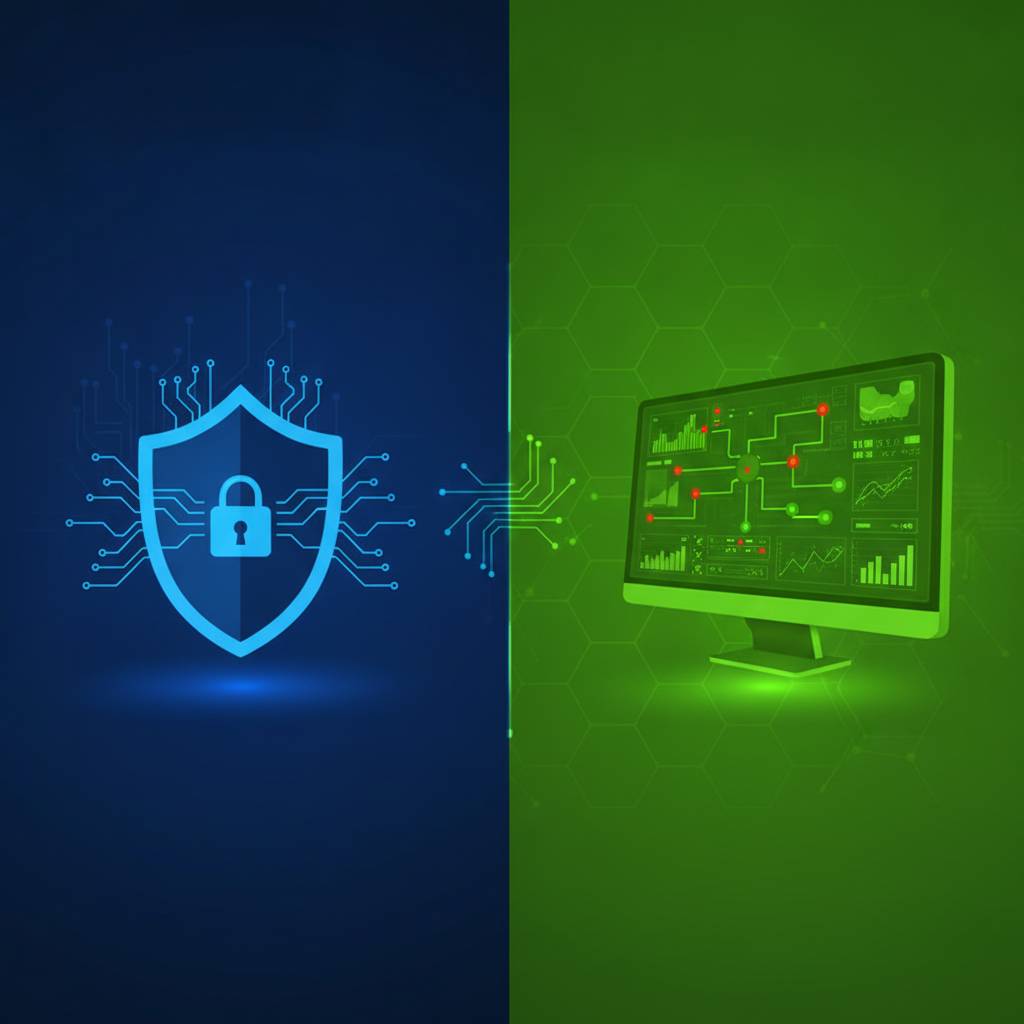
In any IT-driven organization, two teams work behind the scenes to keep the digital infrastructure secure and operational: the NOC and the SOC. While they sound similar, they serve fundamentally different purposes. A Network Operations Center (NOC) focuses on maintaining network uptime and performance, while a Security Operations Center (SOC) focuses on protecting against cyber threats.
A Network Operations Center monitors network infrastructure health, performance, and availability. NOC engineers respond to network alerts, troubleshoot connectivity issues, perform maintenance, and manage bandwidth utilization. The goal is to minimize downtime and ensure business continuity. PJ Networks has been providing 24×7 NOC services to Indian businesses since 2002.
A Security Operations Center monitors security events, analyzes threats, investigates incidents, and coordinates response. SOC analysts use SIEM platforms, threat intelligence, and security tools to detect and respond to cyber attacks. The goal is to protect data, systems, and reputation from breaches.
NOC ensures uptime and performance; SOC protects against security threats. NOC monitors network health; SOC monitors security events. NOC uses tools like Nagios, SolarWinds, PRTG; SOC uses SIEM, EDR, threat intelligence. NOC responds to outages and hardware failures; SOC responds to security incidents and breaches. NOC engineers need networking expertise; SOC analysts need security and threat analysis skills.
In well-run organizations, NOC and SOC collaborate closely. When NOC detects unusual traffic, it may indicate a security issue needing SOC investigation. When SOC identifies a compromised device, NOC helps isolate it. PJ Networks provides integrated NOC and SOC services ensuring seamless collaboration between both teams.
Many Indian businesses choose to outsource NOC and SOC to managed service providers. Outsourcing provides 24×7 coverage, access to skilled professionals, predictable costs, and enterprise-grade tools. Contact PJ Networks for comprehensive NOC and SOC solutions.
Successful implementation of any cybersecurity solution requires a structured approach. Start with a comprehensive assessment of your current security posture to identify gaps and priorities. Develop a clear roadmap that aligns security investments with business objectives and compliance requirements. Choose technology solutions from vendors with proven track records, strong support ecosystems in India, and integration capabilities with your existing infrastructure. Invest in training and skill development for your team to ensure they can effectively operate and manage the deployed solutions. Establish clear metrics and monitoring to track the effectiveness of your security controls over time. Plan for regular reviews and updates as your business evolves, new threats emerge, and regulatory requirements change. A systematic approach to implementation significantly increases the likelihood of achieving your security objectives while optimising your return on investment.
Indian businesses face unique cybersecurity challenges that make this topic particularly relevant. The country’s rapid digital transformation — driven by initiatives like Digital India, UPI payments, and Aadhaar-linked services — has expanded the digital attack surface dramatically across every sector. According to multiple industry reports, India is now the second-most cyber attacked country in the world. Regulatory requirements from CERT-In, the Reserve Bank of India, the Securities and Exchange Board of India, and the new Digital Personal Data Protection Act 2023 are tightening continuously, imposing significant penalties for non-compliance running into crores of rupees. At the same time, Indian organisations face a severe shortage of skilled cybersecurity professionals, making it challenging to build and maintain robust in-house security capabilities. This combination of increased threat exposure, stricter regulatory demands, and talent constraints makes it essential for every Indian business to take a strategic, well-informed approach to their cybersecurity investments and partnerships.
P J Networks has been at the forefront of cybersecurity in India since our founding in 2002. With over two decades of experience serving clients across banking, NBFC, government, manufacturing, IT services, and healthcare sectors, we have developed deep expertise across the full spectrum of cybersecurity domains. Our team of certified professionals holds prestigious industry certifications including CISSP, CISM, CEH, and Fortinet NSE, ensuring that our clients receive expert guidance and implementation support. We are an authorised Fortinet partner with proven experience in deploying and managing Fortinet security solutions across enterprises of all sizes. Whether you need help with strategy development, technology implementation, managed security services, compliance support, or incident response, P J Networks has the expertise and track record to deliver results. We serve clients across India with offices in Delhi and a service footprint that covers every major business hub in the country.
Indian businesses must navigate a complex and evolving regulatory landscape. CERT-In directions mandate specific cybersecurity practices for all organisations including incident reporting within 6 hours, log retention for 180 days, and annual VAPT from empanelled providers. The DPDP Act 2023 imposes strict requirements for personal data protection with penalties up to Rs. 250 crore. Sector-specific frameworks from RBI for banks and NBFCs and SEBI CSCRF for market intermediaries add additional compliance layers. Organisations that fail to meet these requirements face not only financial penalties but also reputational damage, loss of customer trust, and potential operational disruption from regulatory action. A proactive approach to compliance that integrates security controls, monitoring, documentation, and regular auditing is essential for any Indian business operating in today’s regulatory environment.
When evaluating cybersecurity investments, Indian businesses must consider both direct and indirect costs and benefits. Direct costs include technology licences, implementation services, training, and ongoing operational expenses. Indirect costs include the potential impact of security incidents, regulatory penalties, reputational damage, and productivity loss from security breaches. On the benefit side, effective cybersecurity investments reduce the likelihood and impact of security incidents, enable compliance with regulatory requirements, build customer trust, and can even create competitive advantages in markets where security is a differentiating factor. For most organisations, the total cost of a comprehensive security program is far less than the cost of even a single significant security incident. Industry data consistently shows that organisations that invest proactively in security experience lower breach costs, faster incident response times, and better overall business outcomes.